
Which situation fits you?
Every retirement roadmap I build starts from the client’s actual situation, not a generic template. Pick the page closest to yours:
- Singles or single-income households
- Couples and dual-income households
- Business owners
- Medical professionals
- Malaysians with investment properties
- Malaysians with mortgages
- Malaysians with too many insurance policies
- Malaysians earning Singapore dollars
- Malaysians working in the US or Europe
- Malaysians with overseas property
Not sure? Start with a confidential assessment and I’ll tell you which roadmap applies.
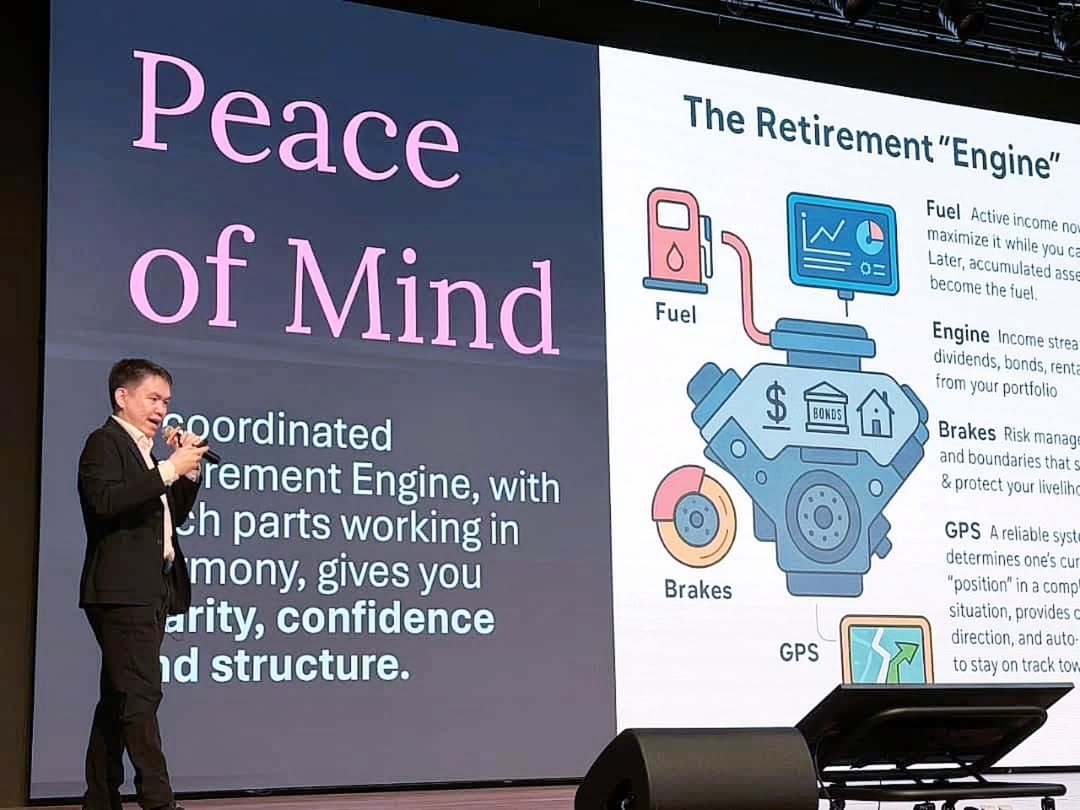
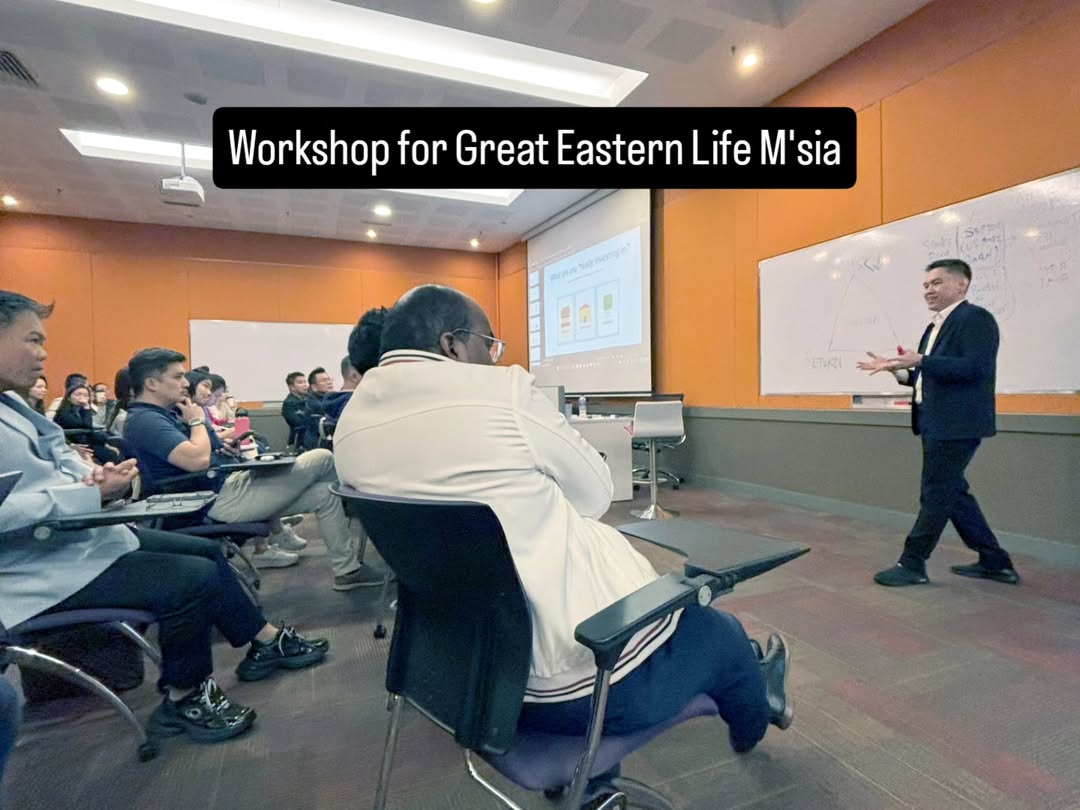
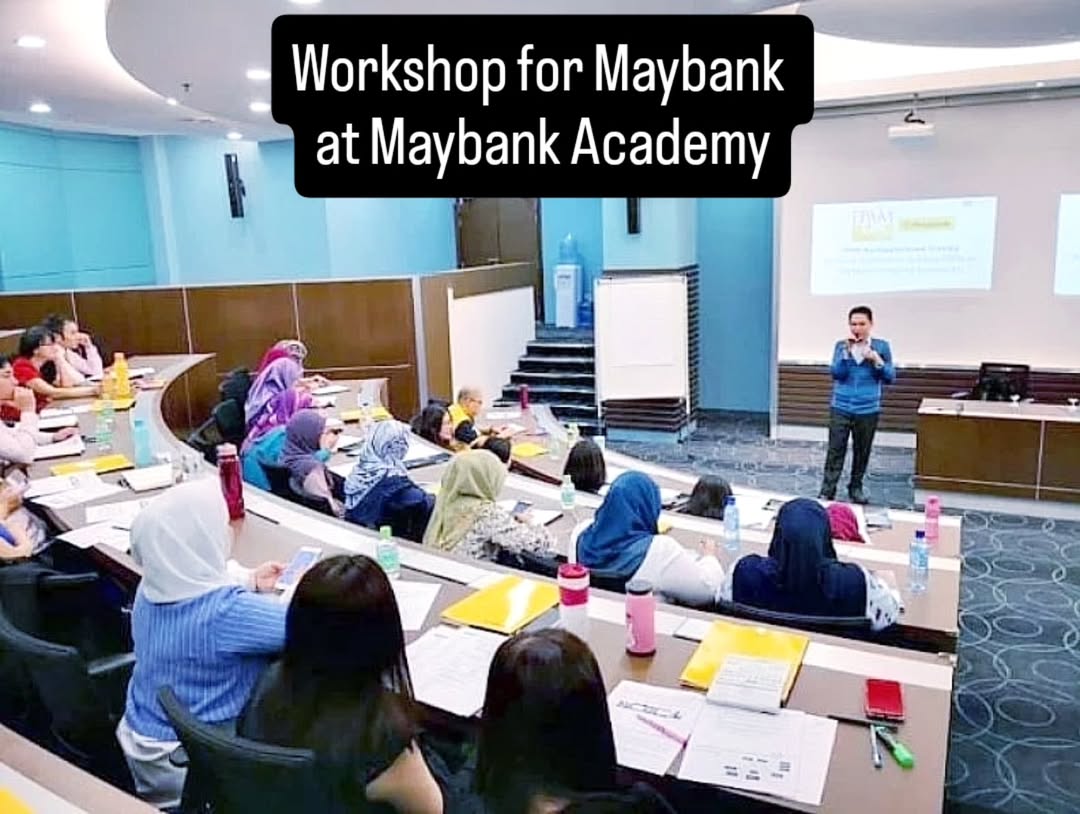
I am CF Lieu, My work includes being a licensed advisor for my retirement advisory clients and trainer for financial institutions and banks since 2012.

Retirement Financial Advisor for Malaysian Expats Abroad
A promotion in Singapore, a medical career in the United States, or a business assignment in the Middle East can improve a Malaysian family’s earning power quickly. It can also leave their finances spread across currencies, tax systems, retirement accounts, property, and insurance policies. A retirement financial advisor for Malaysian expats helps bring those moving parts into one plan – before a high income turns into a collection of disconnected decisions.
For many expats, the concern is not whether they are earning enough. It is whether their current lifestyle, investments, commitments in Malaysia, and retirement savings will still work when they choose to return home, move again, or stop working altogether.
New to cross-border planning? Start with the complete guide for Malaysians working overseas
Why expatriate finances need a different planning process
A domestic financial plan can focus on one country’s rules, currency, and investment choices. An expatriate plan cannot make that assumption. A Malaysian professional working overseas may earn in Singapore dollars or U.S. dollars, own a home in Malaysia, maintain EPF savings, support parents, pay for children’s education abroad, and expect to retire somewhere different from where they work today.
Each decision can look sensible in isolation. The problem appears when the decisions interact. Keeping too much cash may feel safe but can weaken long-term purchasing power. Buying a Malaysian property may provide familiarity but increase concentration in one market. An overseas insurance policy may be useful during an assignment but not fit a family’s long-term needs. A retirement target stated in ringgit may be misleading if future spending will be in another currency.
The objective is not to make every account and policy identical. It is to understand how the whole household works together, then decide which risks are worth keeping and which should be reduced.
What a financial advisor for Malaysian expats should help clarify
Good advice begins with questions that are more practical than product-focused. When do you expect to return to Malaysia, if at all? Where will your children study? What currency will fund retirement? How much of your wealth is tied to your employer, a single property, or one country’s stock market? What happens to your family if your income stops unexpectedly?
The answers shape the plan. They also prevent an advisor from recommending investments, insurance, or retirement strategies before understanding the life those decisions are meant to support.
Retirement is a lifestyle calculation, not an account balance
An expat household may appear financially ahead because its income is high in ringgit terms. Yet retirement readiness depends on future expenses, inflation, health care, housing, family commitments, and the currency in which those costs arise. Someone planning to retire in Kuala Lumpur will face a different spending pattern from someone who expects to remain in Australia, Singapore, or Europe.
A meaningful retirement model tests more than a single projected return. It considers lower investment returns, longer life expectancy, market declines early in retirement, changing exchange rates, and periods when one spouse may stop working. The result is not a promise. It is a decision framework: how much needs to be invested, how much flexibility exists, and which assumptions deserve attention now.
Currency risk deserves a deliberate decision
Currency exposure is unavoidable for most expats. The issue is whether it is intentional. A Malaysian earning in Singapore dollars but planning to retire in Malaysia may benefit from holding assets across more than one currency. But converting everything back to ringgit immediately may not always be appropriate, especially if future education, travel, or retirement costs are partly overseas.
There is no universal allocation. The right approach depends on the currency of your future liabilities, time horizon, income stability, and tolerance for fluctuations. A plan should identify currency mismatches rather than treating exchange-rate movements as a short-term trading opportunity.
Investments should not duplicate your career risk
Many overseas professionals already have substantial exposure to their country of employment through salary, bonus, employer stock, local property, and retirement plans. Adding most of their investment portfolio to the same market can create a concentration risk that is easy to miss during good years.
Portfolio construction should account for what you already own and what your income depends on. This includes Malaysian holdings, overseas brokerage accounts, company shares, EPF balances, property, cash reserves, and private business interests. The goal is a portfolio that can support your plans without relying too heavily on one employer, sector, currency, or market outcome.
Insurance needs to work across borders and life stages
Insurance often becomes fragmented after an overseas move. Some coverage is provided by an employer, some is held in Malaysia, and some may be bought in the country of residence. The most expensive mistake is assuming coverage exists without checking its scope, ownership, portability, exclusions, and end date.
An employer medical plan can be valuable, but it may end when employment changes. Life or disability coverage should be assessed against the household’s actual obligations: mortgage debt, dependents, education costs, business commitments, and the income needed to maintain the family’s standard of living. The right amount of protection changes as assets grow and children become independent.
The decisions that need coordination
Cross-border planning is less about finding a clever product and more about sequencing decisions correctly. Before investing a large annual bonus, for example, it may be necessary to set aside tax reserves, strengthen emergency liquidity, address expensive debt, or update protection for the family.
Property requires the same discipline. A Malaysian home can be emotionally important and financially sensible, but it should be tested against rental income, loan payments, vacancy risk, maintenance, existing property exposure, and the family’s likely return timeline. Buying another property simply because cash is available can reduce flexibility precisely when an international move requires it.
Tax and estate matters also require specialist attention. Residence status, reporting obligations, inheritance rules, and tax treatment of investments can vary significantly by country and personal circumstances. A financial planner can identify the questions and coordinate the broader plan, while qualified tax and legal professionals should advise on jurisdiction-specific obligations.
A better way to evaluate your current position
Start by creating a household balance sheet that is complete, not merely convenient. Include every asset and liability, the currency it is held in, its owner, whether it is liquid, and its purpose. Then list monthly spending in both current and expected retirement locations. This exercise often reveals that a family has more wealth than it realized, but less accessible liquidity or diversification than it assumed.
Next, define three possible paths: remaining overseas for the next decade, returning to Malaysia sooner than expected, and retiring outside Malaysia. Stress-test the plan against lower returns, a job transition, medical costs, a weaker currency, and a property that takes longer to sell. Planning is more useful when it gives you options rather than one fragile forecast.
Finally, prioritize implementation. A strong plan should make clear what needs action in the next 90 days, what can wait, and what should be reviewed annually. This may mean consolidating investments, revising asset allocation, reducing unnecessary insurance overlap, setting a clearer savings rate, or deciding how much future wealth should remain in Malaysia.
How to choose an advisor without adding another conflict
Expats are often approached by banks, brokers, property agents, and insurance representatives, each with a valid perspective but a narrow starting point. Their recommendation may be useful, yet it may not address the rest of the household’s financial life.
Look for an advisor who begins with your goals, assets, liabilities, family circumstances, and cross-border exposure before discussing solutions. Ask how the advisor is paid, whether recommendations are tied to particular products, and how investment, retirement, insurance, and property decisions are evaluated together. An independent, flat-fee second opinion can be especially valuable before a major investment, property purchase, or policy commitment.
For households that want to see the connections more clearly, a structured planning process can model retirement, investments, property, debt, insurance, and lifestyle decisions together. Tools such as EquaWealth can support that analysis, but the value comes from applying professional judgment to the assumptions and acting on the findings.
Your expatriate years may be the period when your financial choices have the greatest long-term impact. Give each major decision a place in a larger roadmap, so your wealth supports the life you want wherever home may be.